

Proactive Strategies: Building a Relapse-Resistant Lifestyle
Lasting recovery is about more than simply avoiding triggers; it’s about actively building a life that feels fulfilling, stable, and joyful. Instead of focusing only on what you are leaving behind, this part of the journey is about creating a future you don’t want to escape from. This proactive mindset is a core component of effective relapse prevention strategies, as it builds a strong foundation of well-being that makes you more resilient. Developing these habits takes patience and consistency, but each small step strengthens your recovery.
Create Structure and Routine
In early recovery, predictability can be a powerful source of comfort and stability. A structured day reduces anxiety and decision fatigue, freeing up your mental energy for healing. Focus on foundational habits like maintaining a consistent sleep schedule to support mood regulation, nourishing your body with balanced meals and proper hydration to minimize cravings, and planning your day-even just a few key activities-to create a sense of purpose and forward momentum.
Develop Healthy Coping Mechanisms
Learning to manage stress, boredom, and difficult emotions without substances is a critical skill. Exploring healthy coping mechanisms provides new tools for navigating life’s challenges, and these are powerful strategies for avoiding relapse because they replace old habits with positive, life-affirming ones. Consider incorporating practices like:
Mindfulness and meditation to stay present and calm your nervous system.
Regular physical activity, such as walking, yoga, or going to the gym, to release endorphins and improve your mood.
Engaging in new hobbies that spark curiosity and joy, helping you build confidence and a new identity in sobriety.
Build Your Sober Support System
Connection is the opposite of addiction. Building a reliable support network is essential for long-term success. This may involve navigating changes in old friendships and learning to set healthy boundaries. It’s also about actively seeking out new connections. Support groups offer a community of people who understand your journey, and there is a variety of pathways available, from 12-Step programs to SMART Recovery and Wellbriety. Learning to communicate your needs clearly with family and trusted friends will also strengthen the bonds that support you.
In-the-Moment Tactics: Your Toolkit for High-Risk Situations
While long-term planning is essential to your recovery journey, it’s just as important to have tools you can use when a trigger or intense craving appears unexpectedly. The primary goal of these techniques is to create a crucial pause-a space between the urge and the action-giving you time to recenter and make a conscious choice. Practicing these skills when you are calm and clear-headed will make them feel more natural and accessible when you need them most. These immediate strategies for avoiding relapse are your personal first-aid kit for navigating high-risk moments.
Use the H.A.L.T. Method
Often, a powerful craving is your body’s way of signaling an unmet need. The H.A.L.T. method is a simple yet profound tool for self-assessment. Before reacting to an urge, pause and ask yourself:
Am I Hungry?
Am I Angry?
Am I Lonely?
Am I Tired?
By addressing the root cause-whether it’s needing a nutritious meal, a moment to process frustration, a conversation with a friend, or a short rest-you can often defuse the craving’s power without ever engaging with it directly.
Practice Delay and Distraction
Cravings, no matter how intense they feel, are temporary. One of the most effective in-the-moment strategies for avoiding relapse is to simply wait it out. Make a commitment to yourself to wait just 15 or 20 minutes before acting on the urge. During that time, actively change your physical and mental environment. Get up and go for a brisk walk, put on your favorite upbeat music, solve a puzzle, or tackle a small household task you’ve been putting off. This combination of delay and distraction interrupts the craving’s momentum and restores your sense of control.
Reach Out and Connect
Isolation can amplify cravings and make challenges feel insurmountable. Connection is the antidote. Have a pre-made list of supportive, trusted people you can call or text when you feel vulnerable. Be open and honest about what you are experiencing; sharing the burden can significantly lessen its weight. Remember, reaching out is a sign of strength.
The Critical Role of Aftercare and Continued Support
Completing a treatment program is a monumental achievement, but the journey of recovery continues long after you leave. This next phase is where you begin to apply the tools and insights you’ve learned to the rhythm of daily life. Continued support, often called aftercare, provides the essential structure, guidance, and accountability needed to navigate this transition with confidence. It’s not just a safety net; it’s a foundational element of your long-term wellness and one of the most effective strategies for avoiding relapse. This is where you strengthen your foundation for a successful, sober future.
Finding Your Pathway in Aftercare
Your journey is personal, and your aftercare plan should reflect that. We believe in providing a variety of pathways to support your continued growth. Common options include:
Intensive Outpatient Programs (IOP): Offering structured therapy and group sessions that fit into your daily life, allowing you to live at home while receiving a high level of care.
Individual Therapy: A private, confidential space to address underlying issues like trauma or co-occurring mental health conditions with a dedicated therapist.
Alumni Programs: Connecting you with a strong, sober community for shared encouragement, understanding, and lifelong fellowship.
What to Do if You Have a Lapse
A lapse or setback is not a failure-it is a sign that your recovery plan needs adjustment. If you experience a lapse, the most important step is to reach out for help immediately. Don't let shame or guilt isolate you. Contact your therapist, sponsor, or support group. Together, you can analyze what led to the lapse and strengthen your coping mechanisms to move forward with greater wisdom and resilience.
Planning Your Next Steps
Long-term recovery is built on a continuum of care that adapts to your evolving needs. Thinking ahead and planning your next steps is a core part of building sustainable strategies for avoiding relapse. At Recovery Centers of Montana, we are dedicated to supporting you at every stage of your journey, from initial treatment to lifelong community connection. Our goal is to empower you with the tools and compassionate support you need to thrive.
Embrace Your Journey to Lasting Recovery
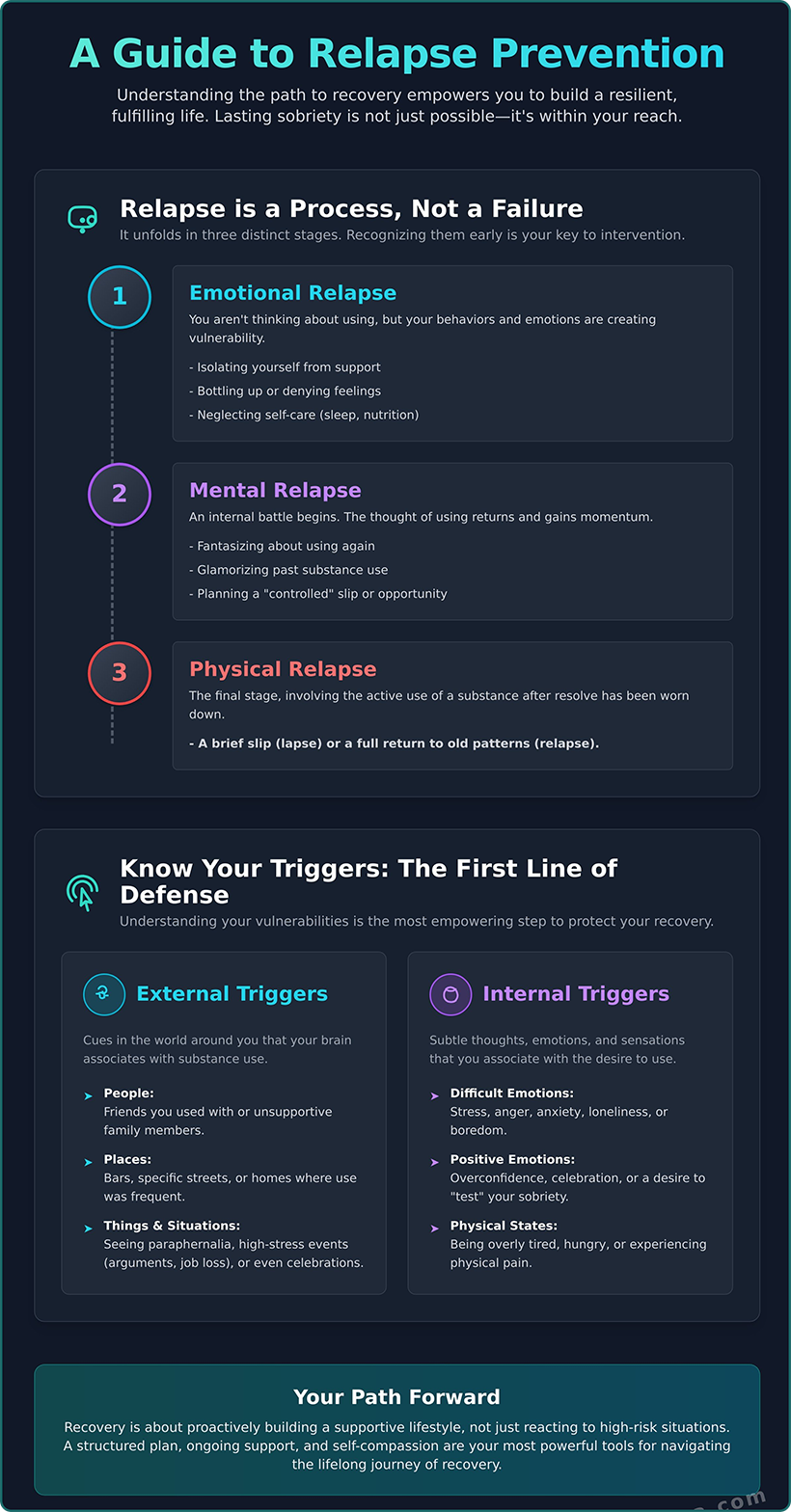
Recovery is a personal journey, not a destination. The most powerful takeaway is that relapse is a process, not a failure, and it can be navigated with the right tools. By identifying your personal triggers and building a relapse-resistant lifestyle, you empower yourself to face challenges with confidence. These proactive strategies for avoiding relapse are not about achieving perfection, but about making consistent, compassionate progress toward a healthier future.
You do not have to walk this path alone. At Recovery Centers of Montana, we provide compassionate support for your journey. Our holistic, evidence-based treatment includes gender-specific residential programs that focus on healing underlying mental health issues in a safe, understanding community. Your journey to lasting recovery is possible. Contact Recovery Centers of Montana today to learn about our supportive programs.
Frequently Asked Questions About Relapse Prevention
What is the difference between a slip, a lapse, and a relapse?
A slip is a brief, one-time return to substance use, while a lapse may involve using for a short period before quickly recommitting to recovery. A relapse is a full return to old, problematic patterns of use. It is vital to view any of these not as failures, but as opportunities to learn and strengthen your recovery plan. Understanding the distinction helps you respond with self-compassion and get back on your path without unnecessary shame or discouragement.
How long am I at risk of relapsing after getting sober?
The risk of relapse is highest during the first 90 days of sobriety, but recovery is a lifelong journey. While the risk decreases significantly over time, it never disappears completely. The first year is a critical period for building a strong foundation with new habits and a solid support system. With continued commitment to your well-being, you can confidently navigate challenges and maintain your sobriety for years to come, growing stronger in your recovery with each day.
Can I prevent relapse all on my own without a support group?
While developing self-reliance is important, recovery is a journey that is much safer and more sustainable with community support. Connection is one of the most powerful strategies for avoiding relapse. Groups like AA, SMART Recovery, or an alumni program provide a safe space to share experiences and gain perspective from others who truly understand. This shared encouragement and accountability is incredibly difficult to replicate when you are navigating recovery completely on your own.
What is the best way to support a loved one who has relapsed?
The most effective way to offer support is with compassion, not judgment. Express your love and concern while maintaining healthy boundaries to protect your own well-being. Encourage your loved one to reconnect with their treatment professionals or support network, but avoid lectures or ultimatums. Your role is to be a stable, loving presence. Remember to seek support for yourself through resources like Al-Anon, as a loved one’s relapse impacts the entire family.
How do co-occurring mental health conditions like anxiety or depression affect relapse risk?
Co-occurring conditions like anxiety and depression significantly increase relapse risk, as individuals may be tempted to self-medicate difficult symptoms. Untreated mental health challenges can destabilize the emotional foundation needed for lasting recovery. This is why integrated care that addresses both substance use and mental health is so crucial. Learning to manage these conditions with therapy and healthy coping skills is one of the most important strategies for avoiding relapse.
Is it normal to still have cravings months or years into recovery?
Yes, it is completely normal to experience cravings, even years into your recovery journey. Cravings can be triggered by stress, memories, or certain environments. The good news is that over time, their intensity and frequency usually decrease. As you progress in recovery, you learn to recognize these cravings as temporary thoughts, not commands, and you can use your coping skills to navigate them successfully without returning to use. They are a part of the process, not a sign of weakness.